
MATERIALS GUIDE
PVC Tablecloth Materials Explained: Types, Differences and How to Choose
Written on
本文为英文材料选购指南。
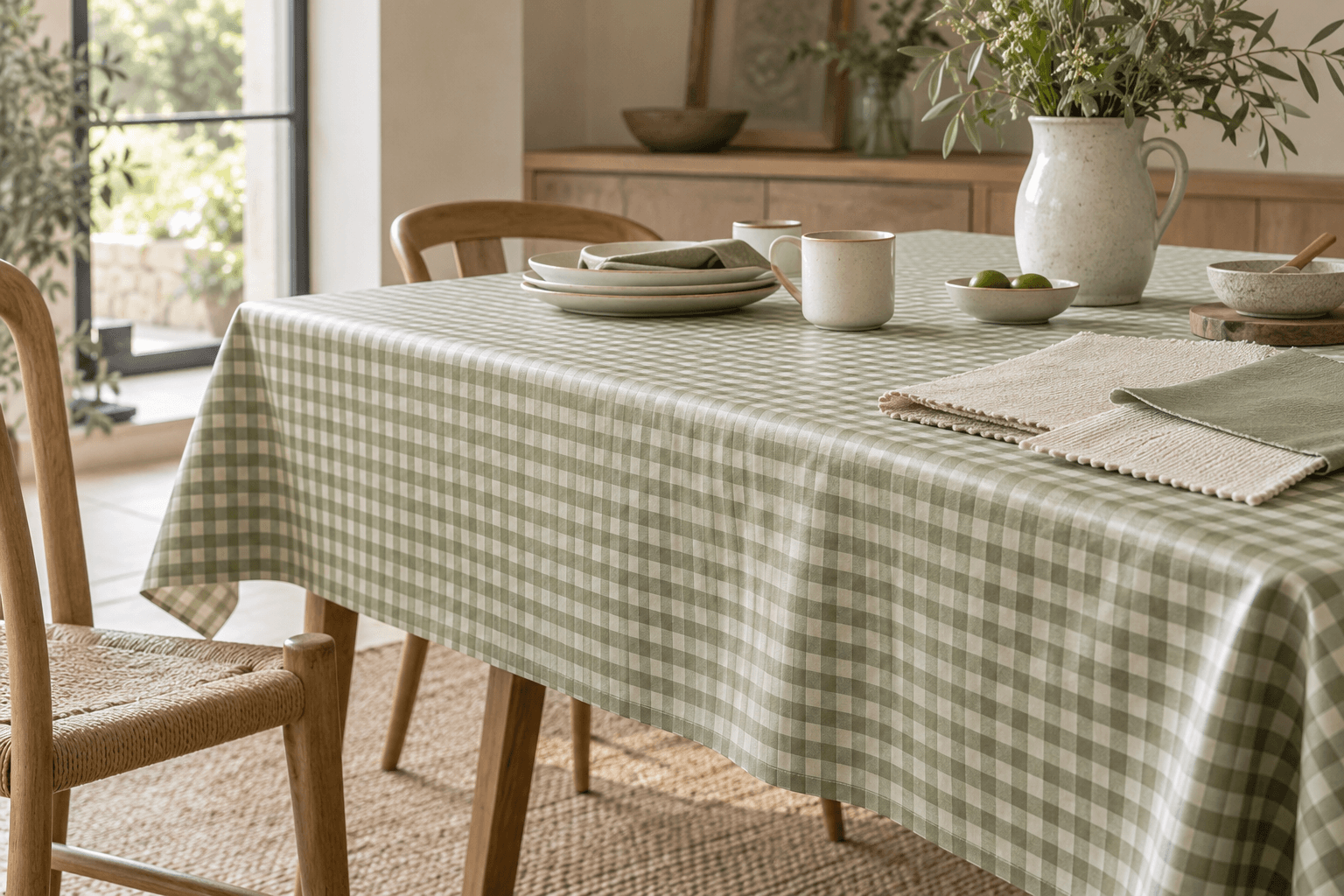
A tablecloth may be described simply as PVC, but the surface film is only part of the story. Backing, thickness, finish and edge construction all affect how a product looks and feels. For importers, retailers and wholesalers, understanding those differences helps turn a broad product idea into a clear sourcing specification.
What makes one PVC tablecloth different from another?
PVC is the material used for the film or coating. A tablecloth may be made from that film alone or combined with a backing. Clear, printed and embossed describe the appearance or surface finish, not necessarily a different base material. These features can overlap: a single tablecloth may have a printed PVC surface and a nonwoven backing.
Common PVC tablecloth constructions
PVC film without a backing
A single-layer PVC table covering has no textile backing. It can be clear, coloured or printed, depending on the film. Clear versions are often chosen to protect a tabletop while keeping its surface visible. When comparing samples, check the thickness, flexibility, transparency and how the material lies on the table. A heavier film is not automatically the right choice for every application.
PVC with a nonwoven backing
This construction combines a PVC surface with a nonwoven layer underneath. Buyers can compare the weight and feel of the backing, how well the layers are bonded and the way the finished cloth drapes. It is a practical option to consider for everyday homeware and retail collections, particularly when a printed surface and fabric-like underside are desired.
PVC with a flannel backing
A flannel-backed tablecloth combines a wipe-clean PVC surface with a soft underside. The backing changes the feel of the product against the tabletop and can help reduce slipping, although the result depends on the actual backing and table surface. Ask for a sample to assess softness, drape, bonding and the finish at the edges.
PVC with a woven or other textile backing
Some constructions use a woven fabric or another textile base beneath a PVC coating or film. The fabric, coating method and weight influence the look and feel, so two products described as fabric-backed may differ considerably. Check the construction and care instructions with the supplier, especially around stitched edges and seams.
Clear, printed, embossed or decorative?
Clear PVC keeps the tabletop visible and is often used as a protective cover. Transparency and thickness can vary, so compare actual samples against the intended surface.
Printed PVC offers a choice of patterns, from checks and florals to seasonal designs. Review colour, print scale and registration on a physical sample; screen colours are not a reliable substitute.
Embossed surfaces add texture and can change the appearance and feel. Ask whether the finish affects cleaning or the look of a particular print.
Lace and decorative styles can create a more ornamental look. Check whether a design is solid or openwork and whether it has a backing: an openwork covering should not be assumed to provide continuous spill protection.
A quick comparison for buyers
| Construction | What to compare | Typical consideration |
|---|---|---|
| PVC film only | Thickness, clarity, flexibility | Visible tabletop or simple wipe-clean cover |
| Nonwoven backing | Backing weight, bonding, drape | Printed everyday collections |
| Flannel backing | Softness, grip, bonding | Soft underside and tabletop contact |
| Textile backing | Fabric, coating, seams | Fabric-like appearance and feel |
These are starting points, not performance guarantees. Compare finished samples made to your own specification.
Specification ranges: a product catalogue example
The following figures come from one manufacturer's published tablecloth catalogue. They illustrate how film and backing specifications can be described—not an industry standard or Emida's available production range.
PVC film thickness
0.06–0.25 mmBacking weight
Source: DongGuan Yimei Houseware product catalogue ↗. Film thickness and backing weight use different units and are shown on separate scales.
A 0.20 mm film is twice as thick as a 0.10 mm film, but thickness alone does not determine softness, durability or suitability. Compare physical samples and confirm the full construction.
Specifications to confirm before ordering
- Film and backing: confirm PVC film thickness, backing type and weight, and whether measurements refer to the film or the complete product.
- Size and shape: specify finished dimensions, table shape, drop length and acceptable tolerances.
- Finish and design: provide artwork, colour references, surface finish and an approved sample.
- Edges and packaging: agree on cutting or binding, folding or roll packing, labels and carton details.
- Sample checks: assess drape, creasing, odour, layer adhesion, print and cleaning under conditions relevant to the product. Ask the supplier about heat and care limits rather than assuming all PVC products behave alike.
- Market requirements: identify the destination, intended use and required test documents. For food-contact applications, establish the applicable rules and testing for the finished product with the supplier and an appropriate laboratory.
Is PEVA a type of PVC?
No. PEVA is a different material, not a type of PVC. Both may be used in table coverings, but their properties depend on formulation and product construction. If your market requires a PVC-free product, confirm the composition of the complete article and request relevant documentation and samples.
Choosing the right construction
Start with your customer and intended use, then compare the surface, backing, finish and finished sample together. Share your target dimensions, design, quantity, packaging and destination market with your supplier so the quotation and sample reflect the same requirements.
See our clear PVC table protectors for tabletop-visibility projects, or explore custom printed PVC and PEVA tablecloths for retail and private-label ranges.
For wholesale and private-label projects, learn more about Emida Home as a PVC tablecloth manufacturer in China.
Discuss your tablecloth project ↗References
The following resources provide background on product constructions and food-contact requirements. They do not certify individual Emida products.
- DongGuan Yimei Houseware product catalogue ↗Examples of printed tablecloths with nonwoven and flannel backings and their specifications.
- Dura: Tabletop vinyl rolls ↗Examples of clear and printed PVC table-cover materials.
- European Commission: Food contact materials legislation ↗Guidance on EU rules for materials intended or reasonably expected to come into contact with food.
SHARE THIS ARTICLE
LET’S TALK
Send an inquiry
Tell us about the products and specifications you have in mind.